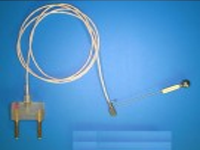
- IH-5 Core System for Isolated Rat, Guinea Pig and Rabbit Heart
The IH-5 Langendorff Core System is the starting point for all isolated perfused heart experiments for rodent models (rat, guinea pig) in the Langendorff retrograde perfusion mode.
The core Langendorff system can be easily upgraded to a working heart-ready configuration any time later.
Please Note: A fully functional IH-5 system requires the addition of core system options and other components. Other options and upgrades enable specific measurements or applications.
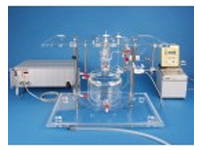
- IH-5 Core System Options
Additions to the IH-5 Core System for species-specific Langendorff Only or Langendorff Working Heart-Ready configurations.
Please Note: A fully functional IH-5 system requires the addition of core system options and other components. Other options and upgrades enable specific measurements or applications.
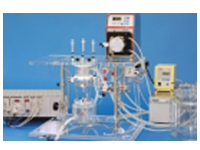
- Working Heart Upgrade for IH-5 Core System
Upgrade an IH-5 Langendorff configuration to an IH-5 Working Heart (according to Neely) System.
- Fully-ejecting working heart model for physiological cardiovascular studies in rat, guinea pig and rabbit
- Allows rapid and easy switching between Working Heart (Ejecting Heart) and Langendorff modes.
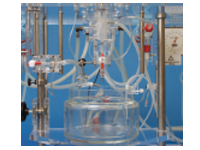
- IH5-BI Biventricular Working Heart System for Rat, Guinea Pig and Rabbit
IH-BI Biventricular Working Heart System for Rat, Guinea Pig and Rabbit provides a valuable tool for the researcher who wants to study whole-heart cardiac function.
The Biventricular Isolated Working Heart perfusion system utilizes patented flow resistance and compliance chambers to faithfully mimic the in vivo cardiac preloads and afterloads for both normal and diseased states in medium to large models (rat, guinea pig, rabbit). The exclusive features of the system create the most physiological isolated heart environment closely resembling the actual resistance of the eripheral vasculature while allowing the entire heart to work as it does in vivo, setting a new standard for isolated heart research.
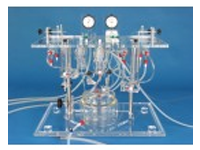
- Measurement of pO2, pH, pCO2 for All Isolated Organ Systems
The Universal Perfusion Solution Monitor permits precise continuous or discontinuous measurement in liquid media or perfusate of these three key parameters: pO2, pH and pCO2.
It can be used in any isolated organ system: heart, lung, liver, kidney or other organs. It also can be combined with any self-built perfusion system by adding a suitable PLUGSYS housing for the listed modules.
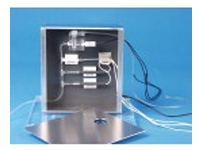
- Flow Measurement Options for IH-SR and IH-5 in Langendorff and Working Heart Modes
Flow measurement can be accomplished in a functional IH system using two methods:
- Indirect measurement by controlling the pump sped of a roller pump (SCP controller)
- Direct measurement with ultrasound transit time technique (TTFM-2 module)
Required components are included in the IH-SR or IH-5 Core Systems and the selected IH-SR or IH-5 Core Systems Options
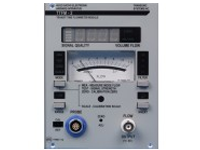
- Left Ventricular Pressure (LVP) Measurement Option for IH-SR and IH-5 Working Heart
Easily allows introduction of a tip pressure catheter directly into the left ventricle via the adapter port and the aorta, rather than via apical puncture.
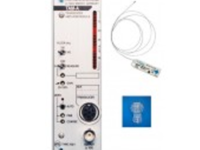
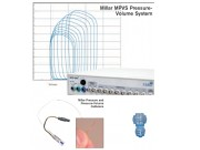
- Pressure-Volume Loop Measurement Option for IH-SR and IH-5 Working Heart
Easily allows introduction of a pressure-volume loop catheter directly into the left ventricle via an adapter port and the aorta.
- Cannulating Options for IH-SR and IH-5 (for Effluate Collection)
Cannulating options for effluate collection from an IH-SR or IH-5 functional system for metabolic studies, sampling the effluate for analysis, or for continuous pO2, pH, pCO2 measurements. Preparation dish and collection funnel available for mouse heart.
- Single-Lead ECG and MAP Measurement for IH-SR and IH-5 Langendorff or Working Heart
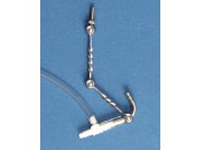
For single-lead ECG and MAP measurements on functional IH-SR or IH-5 Langendorff or working heart systems. ECG and MAP are recorded to be analyzed together.
The Monophasic Action Potential (MAP) electrodes work based on the principle of Franz et al whereby firm, stable contact of the MAP electrode results in a high-quality MAP. MAP recording has been utilized in cardiac physiology for decades as it allows regional assessment of the electrophysiological state of the intact heart.