- IPL-2 Core Isolated Perfused Lung System for Rat or Guinea Pig
The IPL-2 is the most functionally diverse isolated organ system for rat and guinea pig lung, and the standard for most isolated lung preparations.
Guinea pig IPL preparations are preferred for inhalation studies while rat lungs, popular for use in pulmonary metabolism studies, are an ideal size for ease of preparation and cost-effectiveness. The basic system can be easily upgraded to add capability modules for virtually any ex vivo pulmonary assay.
Please note: For a functional unit, the core system requires the addition of a selection of a cannula set and core system options as well as a ventilator.

- Addition to Perfuse Mouse Lungs on IPL-2
Add this option to run mouse perfused lung experiments on an IPL-2 system
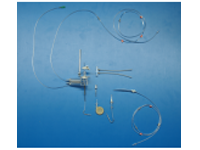
- Deoxygenation Unit for IPL-1 (DEXOY150-1) or IPL-2 (DEXOY150-2)
For deoxygenation of blood or buffers containing proteins (e.g. albumin) or erythrocytes
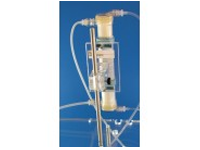
- Real Time Flow Measurement for IPL-2 or IPL-4
Direct real-time flow measurement with functional IPL-2 or IPL-4 systems
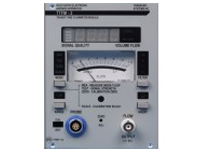
- Venous Pressure Measurement for all IPL Systems (VPM)
Venous pressure transducer and amplifier for venous pressure measurement in an isolated perfused lung system. Amplifier module requires suitable PLUGSYS housing.

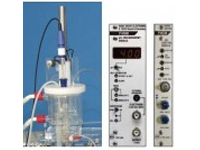
- pH Control Unit for IPL-2 (pHC-2)
Controls and regulates the pH in the buffer solution by carefully bubbling with CO2. Used if Krebs-Henseleit (KH) buffer solution (KH) with albumin is used for perfusion.
KH stabilizes the pH at 7.4 by using 5% CO2. Carbogen has 95% O2 and 5% CO2 but 95% O2 are very high compared to normoxic situations.
In order to keep the pH at 7.4 the perfusate is bubbled with CO2 on occasion. The pH is measured with a pH electrode, if the pH is higher than 7.4 a valve opens and the buffer is bubbled with CO2 until the pH is at 7.4. As soon as pH 7.4 is reached, bubbling stops.
- Perfusion Occlusion System for IPL-2
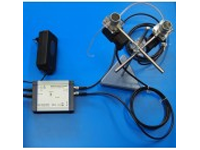
The Perfusion Occlusion System for IPL-2 allow double occlusion.
Allows double occlusion for:
- Measurement of segmental vascular resistances (precapillary and postcapillary resistance)
- Measurement of microvascular pressure
Allows individual arterial and venous occlusion for:
- Determination of large and small artery resistances
- Determination of large and small vein resistances
- Determination of vascular compliance
- Drug Addition Options for All Isolated Organ Systems
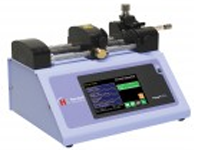
- These options for drug addition can be added to any isolated organ system where flow is measured or calculated and a drug must be added in a certain ratio.There are two options:
- Perfusion flow-controlled drug addition with syringe pump: allows a drug addition proportional to the measured flow in order to maintain a stable drug concentration at any (constant pressure) flow rate. Requires HSE software to read and calculate the flow to control the syringe pump flow.
- Perfusion drug addition with syringe pump: allows drug addition at a set flow rate.
- Measurement of pO2, pH, pCO2 for All Isolated Organ Systems
The Universal Perfusion Solution Monitor permits precise continuous or discontinuous measurement in liquid media or perfusate of these three key parameters: pO2, pH and pCO2.It can be used in any isolated organ system: heart, lung, liver, kidney or other organs. It also can be combined with any self-built perfusion system by adding a suitable PLUGSYS housing for the listed modules.
- Temperature Measurement Addition for All Isolated Organ Systems
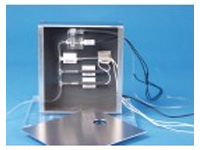
Measure perfusate temperature in any isolated perfused organ system in one of two ways:
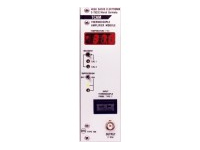
- Using the PLUGSYS Thermocouple Amplifier Module for continuous recording of temperature
- Using a handlheld thermometer showing digital display, no continuous recording possibility