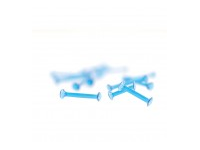
- Anchor Screws
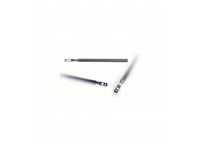
The use of a trephine drill in the skull bone gives a clean 2 mm hole that makes the implantation of a probe easier with less risk of tearing the membrane.
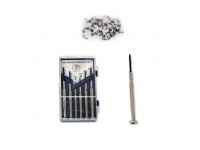
Anchor screws are placed in the skull plates before cementing the guide cannula to provide extra stability to the mount. Suitable Screw Drill Bits and Screw Driver Kit for the Anchor Screws are available.
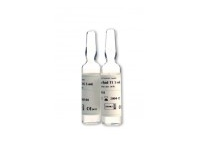
- CMA Perfusion Fluid
This isotonic sterile perfusion fluid is specially developed for microdialysis use.
T1 fluid is for use in peripheral tissues and CNS fluid is used in studies of the Central Nervous System. It is conveniently packed in glass ampoules, 5 ml (pkg of 10), ready to use.
Perfusion Fluid CNS, for central nervous system:
- NaCl 147 mmol/l
- KCl 2.7 mmol/l
- CaCl 2 1.2 mmol/l
- MgCl 2 0.85 mmol/l
- Total chloride content:153.8 mmol/
Perfusion Fluid T1, for peripheral tissues
- NaCl 147 mmol/l
- KCl 4 mmol/l
- CaCl 2 2.3 mmol/l
- Total chloride content:155.6 mmol/l
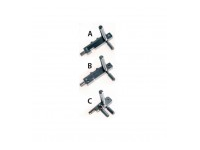
- CMA Probe Clips
CMA Probe Clips are used in conjunction with a connecting rod and adapter in stereotaxic work to place the probe or guide in an exact position in the tissue. The clips are also used separately when preparing and testing the probe.
There are three types of clips:
- CMA 11&12 Clip holds the flat body of the CMA 11 or CMA 12 Probes or Guide Cannulae
- CMA 7 & 8 Clip holds the body of a CMA 7 Probe or CMA 8 Probes or Guide Cannula
- CMA Probe Shaft Clip holds the shaft of a probe
- FEP Tubing
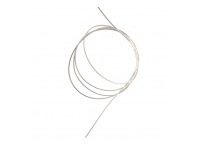
FEP Tubing allows safe connections of the CMA 11 and CMA 12 probes to pumps and fraction collectors.
The FEP Tubing with a 0.12 mm inner diameter (internal volume of 1.2 µL/100 mm length) is, together with the Tubing Adapters, ideal for use in microdialysis experiments.
- Glass Ionomer Cement
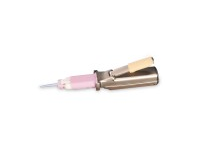
This resin-based glass ionomer cement is ideal for permanent head attachment of microdialysis probes and head block tethers in rats and mice.
It has significant advantages over the more commonly used methylmethacrylate cements. It bonds to bone, eliminating the need for bone screws in most cases. It has a much lower temperature increase during polymerization and it hardens more quickly with no noxious fumes.
- Split Tubing for CMA 20 Probes
- Trephine Drill Bits
- Tubing Adapters
The Tubing Adaptors are used for connecting FEP Tubing to the probe, swivel, liquid switch and syringes. These simple but secure connectors, which swell in 70 % alcohol and shrink back in air, ensure tight, zero internal volume connections of FEP Tubing to the probe, swivel, liquid switch and syringes.
Tubing Adaptors for Linear Probes are specially manufactured to fit the outlet of the Linear Probe to be connected to a swivel or a CMA 470 Fraction Collector. Handling procedure as above.